Alpha Amylase for Flour Mills
Aleuron Works supplies alpha amylase for flour mills that need controlled treatment decisions, not generic enzyme additions. Our focus is practical: help quality and production teams manage wheat variation, support predictable dough behavior, and keep flour performance aligned with customer specifications.
If you are looking for an enzyme supplier for flour mill treatment, the right conversation starts with your flour stream, your customer applications, and the variability you are trying to control.
A calibrated approach to flour performance
Alpha amylase is used in flour milling to support starch conversion during dough fermentation. In practical bakery terms, that can influence gas production, dough development, crust color, crumb character, and finished product consistency.
For a mill, the decision is rarely simple. Treatment needs to sit inside real production constraints:
- Wheat lots with changing natural enzyme contribution
- Protein and ash targets that cannot be ignored
- Extraction decisions and starch damage realities
- Bakery customers with different process tolerances
- Existing oxidant, reducing, emulsifier, or enzyme systems
- Operator-friendly dosing and repeatable incorporation
- Trial evidence that can stand up to customer review
Aleuron Works helps mills position alpha amylase as a precise performance adjustment inside the flour system.
Built for mill-floor decisions, not catalogue assumptions
We work with quality managers, technical millers, procurement teams, and bakery application leads who need a supplier that understands the pressure between crop variation and customer consistency.
Our alpha amylase supply approach is designed around three questions:
What does the flour need to do?
Treatment should be matched to the end use. Pan bread, buns, flatbreads, fermented doughs, and general-purpose bakery flour do not all ask the same thing from starch conversion and fermentation support.
What is the mill already managing?
Protein range, ash limits, extraction level, starch damage, granulation, wheat blend, and current additive package all affect the treatment decision. We do not recommend alpha amylase in isolation from the flour matrix.
How will the trial be validated?
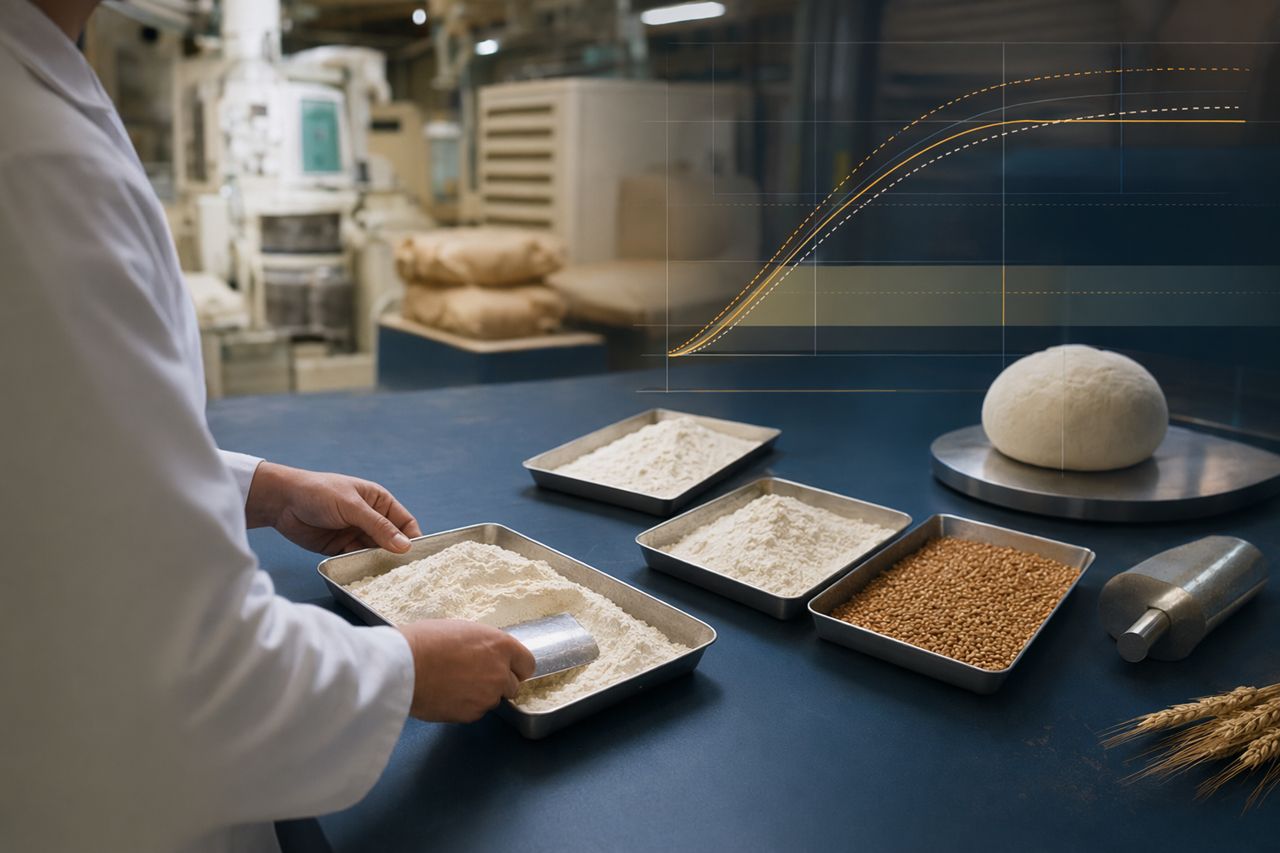
A good treatment plan should be measurable in the way your mill and your bakery customers evaluate performance: dough handling, proof tolerance, volume response, crust color, crumb structure, product uniformity, and complaint reduction over production lots.
Where alpha amylase can create buyer value
For flour mills, the value is not simply adding an enzyme. The value is reducing uncertainty between the wheat intake and the customer’s process.
Alpha amylase treatment can help support:
- More consistent fermentation response across changing wheat lots
- Improved alignment with bakery flour performance expectations
- Better control of crust color and bake appearance where under-fermentation or weak sugar availability is a concern
- More stable dough behavior in customer applications
- Reduced rework, complaints, and specification friction tied to variable flour performance
- A clearer technical basis for mill-bakery discussions
The right result is a flour that behaves more predictably without pushing the formulation beyond what the customer expects.
Dosage control and production fit
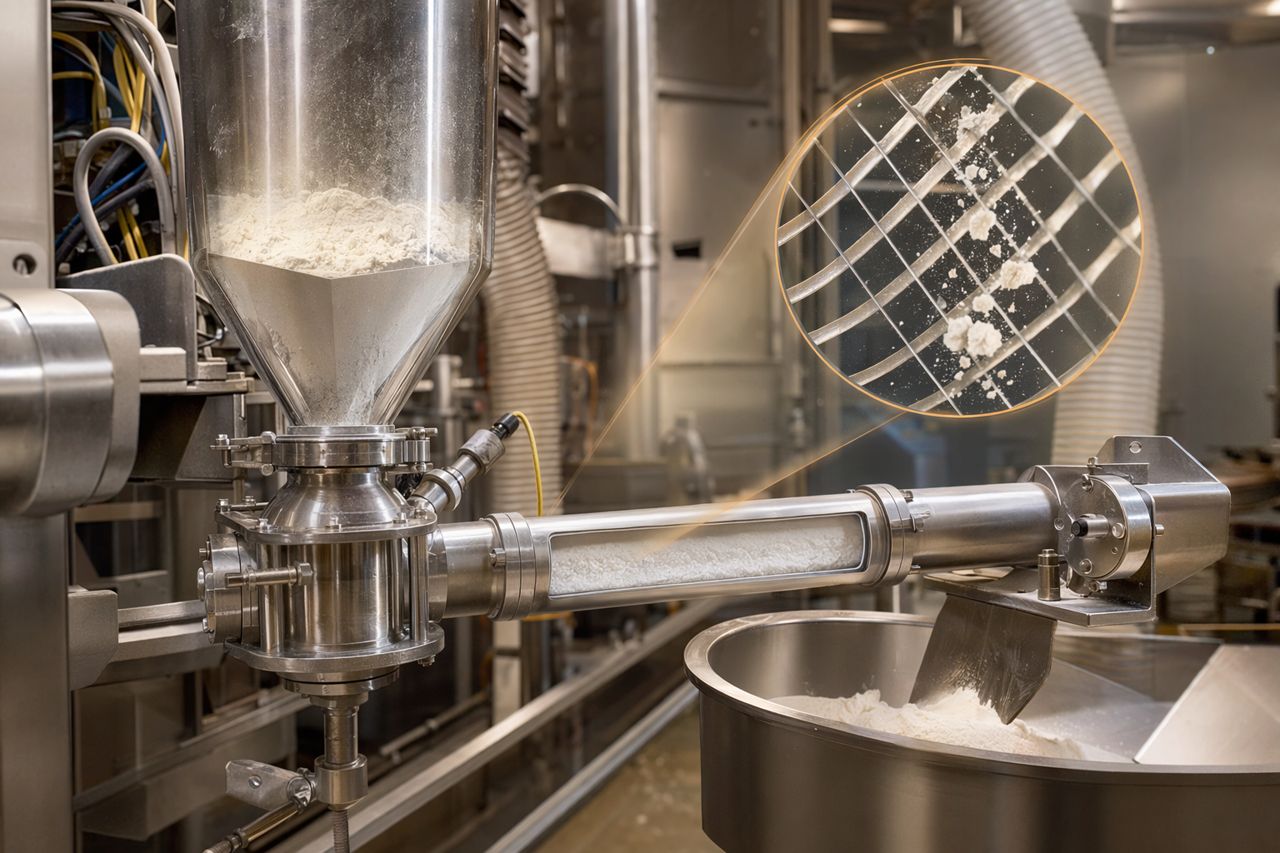
Treatment has to be practical in a working mill. Aleuron Works supports alpha amylase selection with attention to handling, dispersion, dosing discipline, and production repeatability.
We can discuss supply formats and incorporation points that fit your current process, including treatment of defined flour streams or finished flour blends. The objective is stable distribution, controlled adjustment, and a process your operators can run without introducing unnecessary complexity.
Trial validation with your flour and your customers
Every mill has its own wheat position, customer base, and risk tolerance. We recommend trial planning before commercial adoption.
A typical discussion includes:
- Target flour type and application
- Current performance concern or customer specification gap
- Wheat blend and expected seasonal variation
- Existing treatment package and label considerations
- Proposed treatment window
- Mill-side checks and customer-side bake validation
- Scale-up plan and purchasing forecast
This keeps the treatment decision evidence-led and avoids over-correction.
Supply conversations for flour mill teams
Aleuron Works is a B2B supplier for mills that need dependable technical dialogue as well as dependable product supply. We can support new treatment programs, supplier qualification, cost-in-use review, and mill-to-customer validation planning.
We are a fit when your team needs:
- Alpha amylase aligned to flour mill treatment objectives
- Practical guidance for treatment windows and trial design
- Support for bakery customer performance discussions
- Reliable B2B quotation and supply planning
- A technical partner that understands flour consistency, not just enzyme chemistry
Request a quote
Tell us the flour type, application, current performance target, monthly demand estimate, and any trial requirements. Aleuron Works will respond with a practical alpha amylase recommendation and quote path for your mill.