Flour correction at the mill: matching the enzyme to the complaint
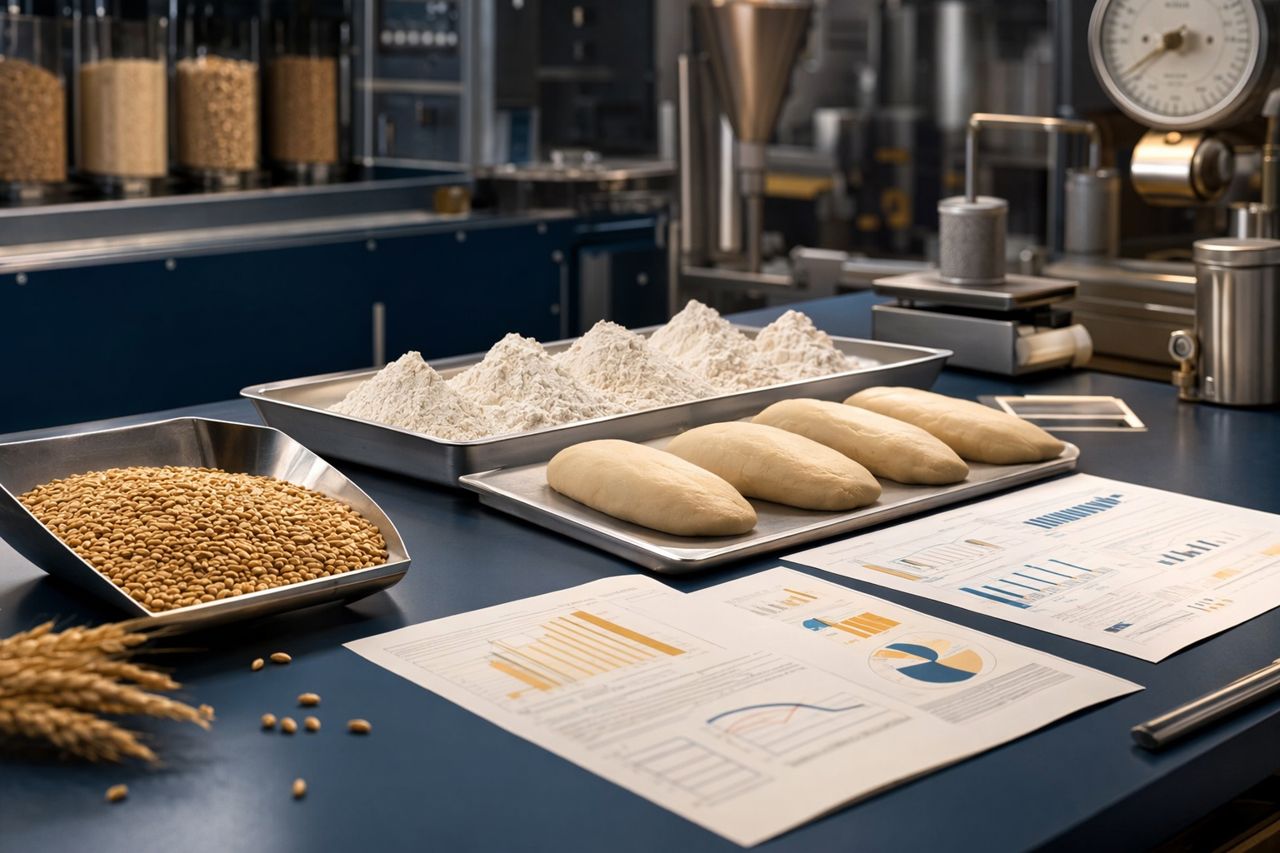
When flour leaves the mill, customers judge it by how it behaves: absorption, mixing tolerance, dough handling, volume, extensibility, and stability against specification. Enzymespark supplies flour-correction enzymes to mills, improver and premix manufacturers, and ingredient distributors, with a mill-floor view of variation — wheat intake, ash and protein realities, extraction decisions, and the need to keep shipped flour inside a controlled performance window.
If you are looking for an enzyme supplier for flour mill treatment, our focus is straightforward: practical correction tools that fit your QA workflow, support repeatable dosing, and help your team validate performance before scale-up.
Request a quote. Send the flour type, the complaint or correction target, the estimated quantity per order or per month, and the delivery country. Bulk and repeat supply, pricing, pack sizes and lead time are quoted per order. Open the quote form
Flour correction starts with the realities of the mill
No enzyme program can replace sound wheat selection, correct tempering, or disciplined milling. It should work with them.
Enzymespark supports flour mills managing:
- Seasonal wheat variability and changing grist composition
- Protein level changes that affect dough strength and tolerance
- Ash and extraction trade-offs that influence customer acceptance
- Damaged starch variation and its effect on fermentation and absorption
- Customer-specific flour performance targets across bakery, noodle, biscuit, and industrial dough applications
- The need for controlled micro-addition without disrupting existing mill operations
Our role is to help your quality and production teams select a correction approach that is measurable, defensible, and practical at plant scale.
Enzyme systems for mill QA objectives
Flour treatment is rarely about a single number. It is about bringing multiple indicators into balance without creating downstream surprises for your customer.
Depending on the flour type and application target, enzyme treatment may be used to support:
More stable dough behavior
Selected enzyme systems can help adjust dough development, extensibility, gas retention, softness, or handling characteristics. The target is not a dramatic change; it is controlled movement toward a known customer specification.
Improved lot-to-lot consistency
Mills often face natural fluctuation in wheat functionality even when basic compositional results appear acceptable. Enzyme correction can provide a calibrated lever to reduce performance spread between flour lots.
Better alignment with customer processing conditions
Industrial bakeries and food manufacturers run tight processes. A flour that looks acceptable on paper can still fail in mixing, proofing, sheeting, fermentation, or final volume. We support enzyme selection based on the actual use case, not a generic flour category.
Practical treatment of flour streams and finished flour
Correction may be planned around finished flour blending, stream flour behavior, or customer-specific treatment programs. We help mills think through where treatment belongs in the process and how dosing control will be maintained.
Matching the enzyme to the complaint your customers report
When a bakery customer reports dough that varies from batch to batch, a texture that is not consistent, or a dough with little tolerance in the process, the cause is often an enzyme chosen without a clear target. Correction works better when each enzyme is picked for the part of the dough it acts on.
Four parts of the dough, four groups of enzymes
A flour dough can be read as four parts: starch, protein, lipid and fiber. Each enzyme in a correction program acts mainly on one of them, so the first question for any complaint is which part of the dough is behind it.
| Part of the dough | Enzymes that act on it | What a correction there aims for |
|---|---|---|
| Starch | Alpha-amylase, maltogenic amylase | Steady fermentation, volume and oven spring, slower staling |
| Protein (gluten network) | Glucose oxidase, protease | Dough strength or extensibility, tolerance in mixing and on automated lines |
| Lipid | Lipase, phospholipase | A uniform crumb structure without added emulsifiers, for clean-label formulas |
| Fiber | Xylanase, cellulase | Better handling and texture in whole-grain and high-fiber flours |
What this means for a correction request
- Name the complaint first, then the part of the dough you think is behind it. Two flours with the same complaint can need different enzymes.
- Each enzyme works in its own temperature window during mixing, proofing and baking. The window matters as much as the enzyme, so trial on the customer's process, not only in the lab.
- Results the right match can support include steady fermentation, better volume, an even crumb, slower staling, better whole-grain texture and smoother running on automated lines. Confirm each one in a trial before it becomes a flour specification.
For a mill, this map turns a vague customer complaint into a specific correction to trial on the flour line, before the next shipment.
Built for dosage control, not guesswork
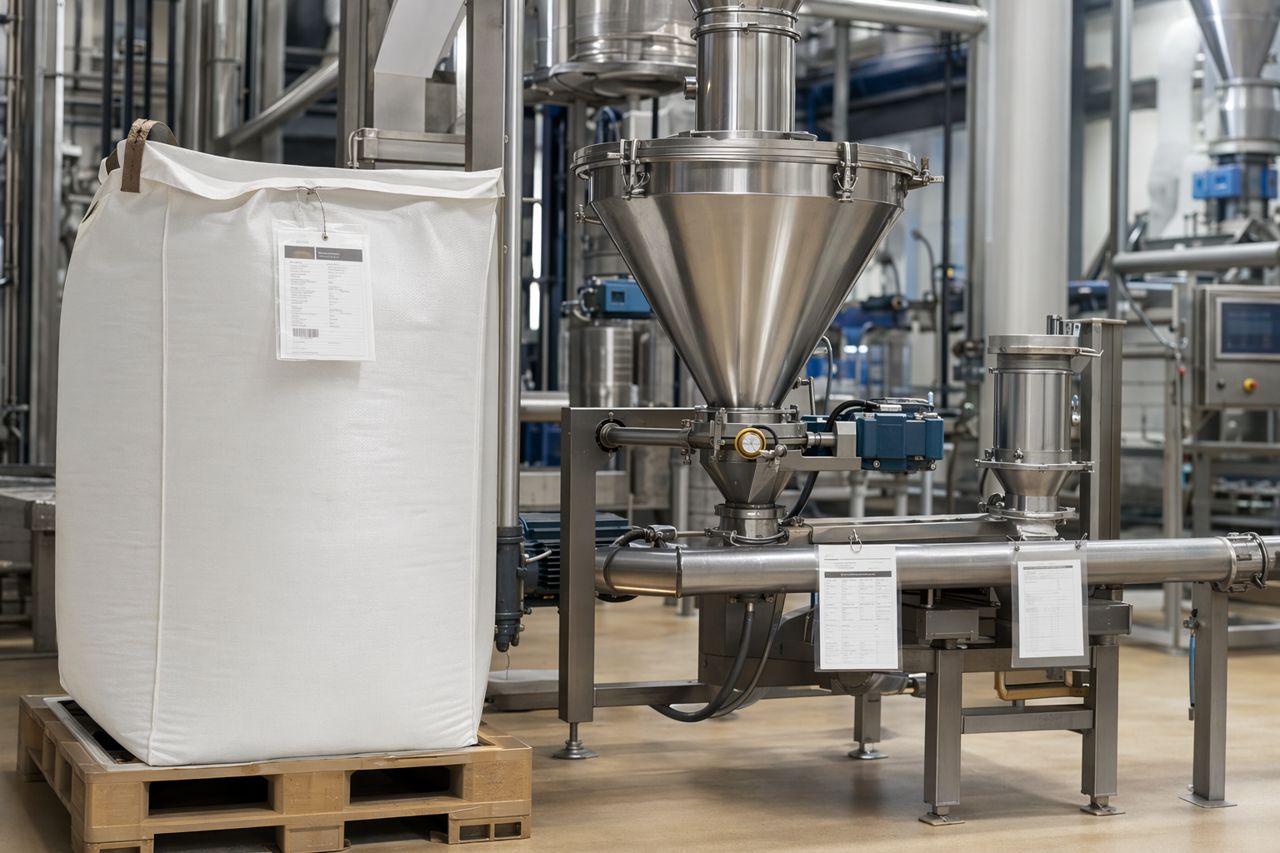
Enzyme buying only makes sense when the product can be used consistently. Enzymespark supplies treatment options with the documentation, handling guidance, and batch traceability expected by industrial flour mills.
We support teams that need:
- Clear product identity and intended application range
- Lot documentation for procurement and QA records
- Stable supply planning for recurring flour programs
- Packaging formats suitable for bulk handling and controlled storage
- Guidance for incorporation through existing dosing and blending systems
- Trial plans that compare treated and untreated flour under realistic conditions
We do not position enzyme treatment as an isolated purchasing decision. It belongs in a controlled workflow: baseline flour data, target customer specification, measured dosage range, pilot validation, production trial, and review of shipped-lot performance.
Trial validation before production commitment
A flour correction program should earn its place in the mill.
Enzymespark can support structured trial work around your operating reality:
- Define the correction target — dough strength, tolerance, extensibility, fermentation behavior, softness, or other customer-relevant performance points.
- Review the flour context — wheat source, extraction, ash, protein, damaged starch tendency, and current customer complaints or specification risks.
- Select the enzyme approach — matched to the flour type and end-use process.
- Run controlled comparisons — untreated control, proposed treatment range, and customer or internal benchmark flour.
- Assess operational fit — dosing repeatability, mixing uniformity, storage considerations, and production scheduling.
- Confirm the release workflow — how QA will approve treated lots and monitor consistency over time.
The result is a treatment decision based on evidence your team can defend internally and with customers.
Support for common flour mill treatment goals
Enzymespark can discuss enzyme options for a range of correction objectives, including:
- Bread flour performance tuning
- Industrial bakery flour consistency
- Steamed bread and bun flour behavior
- Noodle flour processing characteristics
- Biscuit and cracker flour handling
- Whole wheat and higher-ash flour process support
- Customer-specific treated flour programs
Each project is reviewed against the actual mill objective. A correction system for one flour customer may not be right for another, even when the base flour specification looks similar.
What quality managers can expect from Enzymespark
We speak in the language of mill practicality: stable supply, consistent treatment behavior, realistic trial plans, and documentation that supports QA control.
You can expect:
- Technical discussion before product recommendation
- Attention to ash, protein, extraction, and dough behavior realities
- Bulk supply options suited to repeat production
- Support for internal trials and customer validation
- Clear guidance for storage, handling, and dosing workflow
- A practical quote process based on projected use, flour type, and treatment objective
Request a quote for flour correction supply
This page is for business buyers: mills, improver and premix producers, and distributors. To get a quote, send:
- the product, or the flour behavior you need to correct
- the flour grade and the customer application
- the estimated quantity per order or per month
- the delivery country
- any trial, documentation or packaging requirements
- whether the treatment will be validated internally or with a customer
Bulk and repeat supply, pricing, pack sizes and lead time are quoted per order. Enzymespark will reply with a practical recommendation path and a quote.