How Flour Mills Decide Whether a Bread Complaint Is Wheat, Milling, or Enzyme Correction
A bread complaint rarely arrives with a clean cause attached. The customer may report low volume, tight crumb, weak sidewalls, poor tolerance, sticky dough, pale crust, or variable proof response. The mill then has to decide whether the problem began in the wheat, the milling system, the flour specification, the bakery process, or the treatment package.
For a quality manager, the useful question is not simply, "Do we add more enzyme?" It is: what changed, where did it change, and what correction can be validated without creating a new risk?
Aleuron Works supports mills that need enzyme treatment to behave like a calibrated milling adjustment: measurable, repeatable, and defensible in customer conversations. For teams comparing options, we serve as an enzyme supplier for flour mill treatment with a focus on practical trial design, flour behavior, and bakery-facing consistency.
Start With the Complaint Language
Bakery feedback is often sensory and operational. Translating that language into mill-side possibilities is the first step.
Common complaint signals
- Low loaf volume: possible weak gas retention, low fermentable sugar availability, protein quality variation, or under-correction.
- Tight or dry crumb: possible starch damage balance, water absorption mismatch, insufficient dough extensibility, or formula interaction.
- Sticky dough: possible over-softening, damaged starch effects, water management, or enzyme dosage excess.
- Poor proof tolerance: possible weak gluten structure, variable flour strength, fermentation pressure, or treatment imbalance.
- Inconsistent bake color: possible malt balance, sugar release, ash effects, or customer bake profile.
- Machineability issues: possible absorption drift, particle-size distribution, bran contamination, or dough rheology shift.
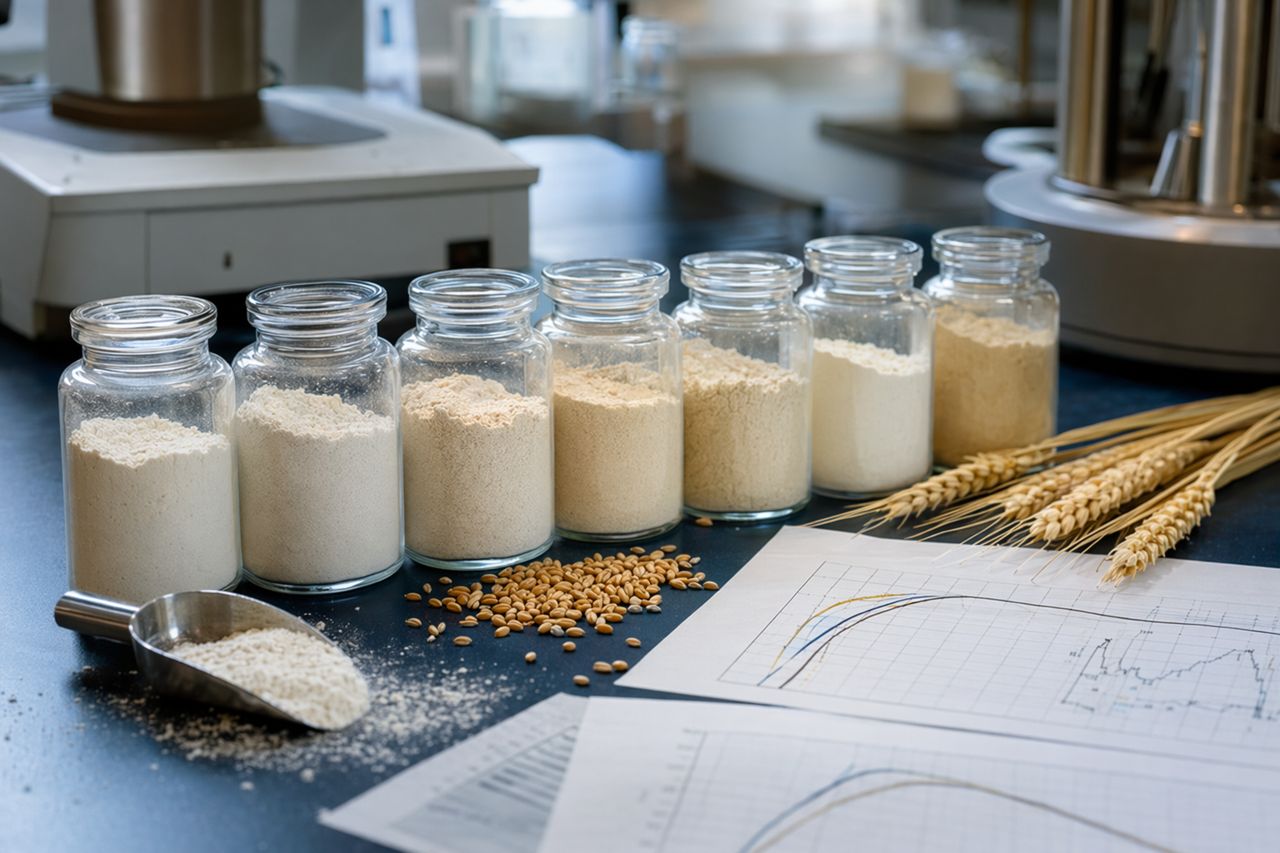
The complaint should be logged against the flour lot, wheat grist, extraction rate, ash, protein, moisture, falling trend, customer formula, and delivery date. Without that link, the mill risks treating a process disturbance as a flour defect.
Separate Wheat Variation From Milling Effects
Before changing the treatment package, confirm whether the flour itself moved.
Wheat-side checks
Wheat can change faster than customer specifications allow. A new crop intake, altered blend ratio, protein redistribution, sprout pressure, or change in gluten quality may show up as bread performance long before it appears as a formal out-of-spec result.
Look for:
- protein level versus protein quality
- wet gluten behavior versus historical norm
- ash movement and bran carryover risk
- falling trend and alpha-amylase background
- water absorption shift
- dough strength and extensibility balance
- crop-year or origin transition
If the same mill settings and same treatment package produce a different dough curve after a grist change, wheat is a leading suspect.
Milling-side checks
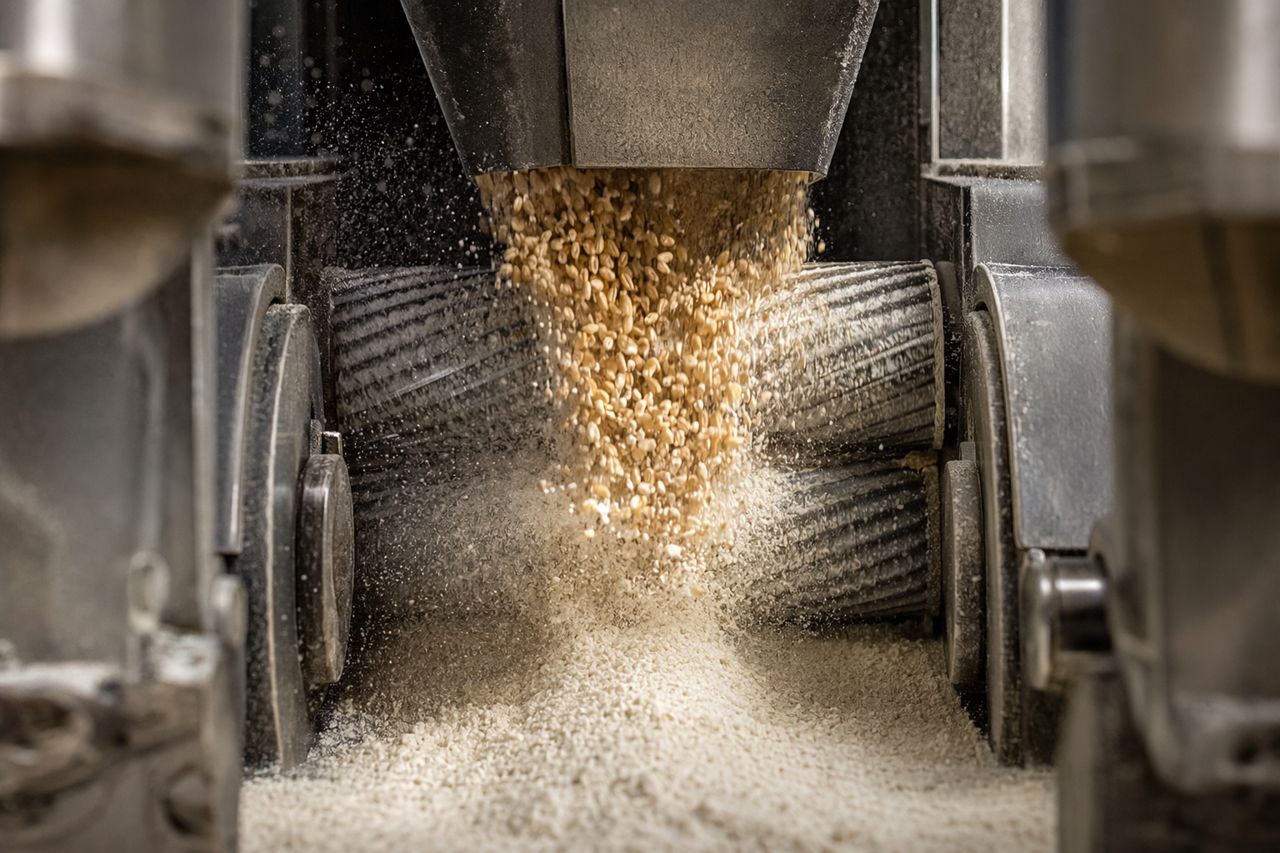
Milling effects can also create bakery complaints while the headline specification remains acceptable. A small change in roll gap, purifier balance, sifter condition, extraction target, starch damage, or flour stream blending can alter dough response.
Review:
- break and reduction balance
- flour granulation and particle-size profile
- starch damage trend
- extraction rate and ash stability
- stream contribution changes
- sifter integrity and tailings behavior
- finished flour homogeneity
If multiple customers report similar dough handling issues from the same production window, the cause may sit in the mill flow rather than the bakery line.
When Enzyme Correction Becomes a Rational Option
Enzyme correction is strongest when the mill has identified a repeatable flour behavior that needs controlled adjustment. It should not be used as a blind masking tool. It works best when it is matched to the specific performance gap.
Typical treatment objectives
- improve fermentable sugar availability for better oven spring and crust color
- support loaf volume where flour strength and dough balance allow it
- improve crumb softness and eating quality over shelf life
- adjust dough extensibility for better moulding and sheeting
- improve tolerance where customer processes demand stable handling
- reduce complaint variability across wheat transitions
The goal is not maximum reaction. The goal is the smallest reliable correction that brings the flour back inside the customer’s working window.
Build the Decision Tree Before the Trial
A disciplined complaint investigation usually follows this order:
- Confirm the complaint. Ask for photos, bake records, formula, water addition, mixing time, proof time, oven profile, and production timing.
- Identify the lot. Trace flour production date, silo, wheat grist, and treatment package.
- Compare against retained flour. Recreate basic dough and bake behavior where possible.
- Check specification movement. Review protein, ash, moisture, falling trend, absorption, dough curve, and historical control limits.
- Review milling conditions. Look for process changes that align with the complaint window.
- Define the correction target. Volume, softness, dough tolerance, extensibility, color, or processing stability.
- Run staged enzyme trials. Use controlled dosage steps, retained flour, and bakery-relevant evaluation.
- Validate with the customer. Confirm the correction in the customer’s process, not only in the mill lab.
This sequence prevents the common mistake of increasing a treatment level before understanding whether the flour has become stronger, weaker, more damaged, more active, or simply less consistent.
Dosage Control Matters More Than Aggressive Correction
Flour treatment should be easy to defend. Quality teams need dosage plans that fit mill realities: batch size, dosing equipment, blending uniformity, silo turnover, and customer sensitivity.
Good dosage practice includes:
- a baseline untreated or current-treatment control
- two or three practical dosage steps around the expected correction range
- side-by-side dough handling notes
- bake performance comparison against the customer complaint
- review of any negative effects, including stickiness, over-relaxation, weak sidewalls, or excessive color
- final confirmation under normal production conditions
Aleuron Works designs recommendations around operational use, not abstract performance claims. The right treatment is the one the mill can dose accurately, blend consistently, and validate under routine production pressure.
Match the Enzyme Type to the Complaint
Different complaint patterns point to different treatment strategies. A practical supplier conversation should connect the enzyme function to the customer’s problem.
For volume and oven spring
A flour may need improved gas production or better dough system support. The correction has to respect gluten quality; pushing fermentation support too far can create color or stickiness issues.
For crumb softness
Softness and shelf-life targets require a balance between fresh-bake texture and delayed firming. The trial should include the customer’s expected storage interval, not only day-one loaf volume.
For dough extensibility
Some bakery lines need dough that sheets, moulds, or expands without tearing. The correction should improve handling without creating excessive slackness.
For tolerance
Tolerance is often the hardest complaint to solve because it may involve wheat quality, formula, water, mixing, fermentation, and enzyme package together. Validation should include a stress condition, such as extended proof or normal production delays, if that reflects the customer’s reality.
What a Mill Should Expect From a Supplier
An enzyme supplier for flour mill treatment should help the quality team make a decision, not simply ship a product.
A practical support package should include:
- review of the complaint and flour data
- recommendation of suitable enzyme functions
- dosage ladder for controlled mill or lab trials
- bakery-relevant evaluation criteria
- guidance on blending and addition points
- documentation suitable for internal approval
- support during customer validation
The supplier should also be clear about limits. If ash movement, protein quality, or starch damage is the dominant cause, enzyme correction may help only after the milling or grist issue is addressed.
Evidence That Makes the Customer Conversation Easier
When a bakery customer complains, the mill needs a response that is technical but not defensive. The best response combines traceability, retained-flour testing, and a proposed corrective trial.
Useful evidence includes:
- flour lot and grist history
- specification trend charts
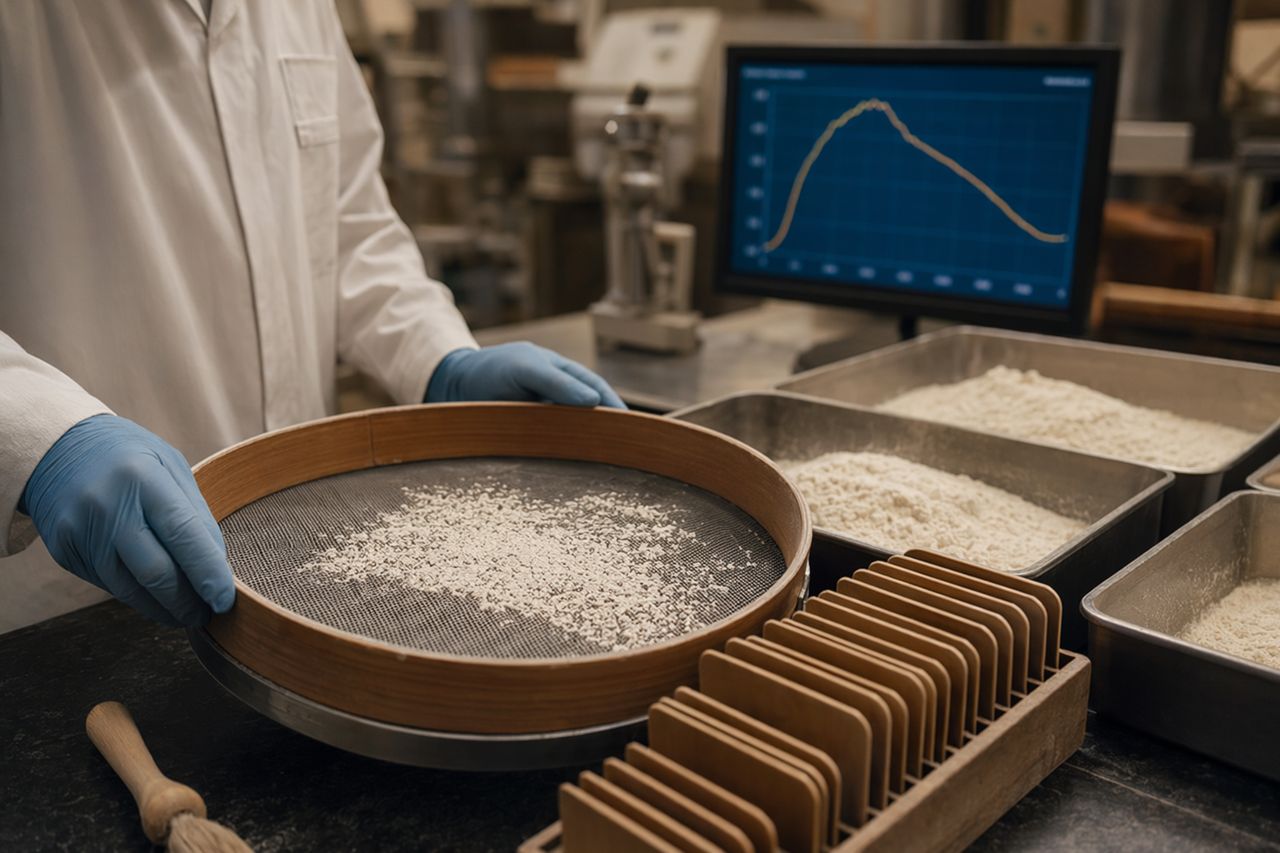
- dough curve comparison against normal range
- bake photos from control and corrected flour
- water absorption and handling notes
- customer-line validation results
- agreed correction level and monitoring plan
This gives the customer confidence that the mill is not guessing. It also protects the mill from making permanent treatment changes based on one isolated bakery disturbance.
Where Aleuron Works Fits
Aleuron Works works with flour mills that need enzyme treatment aligned to wheat variation, milling realities, and customer specifications. We help teams evaluate whether a complaint is best addressed through grist adjustment, milling review, or a controlled enzyme correction.
Our approach is measured:
- define the complaint in bakery terms
- connect it to flour and mill data
- select the appropriate enzyme function
- trial in practical dosage steps
- validate against the customer’s real process
- document the final recommendation for repeat production
If your mill is reviewing bread complaints, changing crop-year wheat, or tightening flour performance for a key customer, we can help structure the enzyme-treatment decision.
Request a Quote
Use the on-site request form to share your flour type, target application, current complaint pattern, and any available quality data. Aleuron Works will respond with a practical quote and trial recommendation for your mill.