Enzyme Supplier for Flour Mill Treatment
Wheat variation does not wait for a convenient production window. Protein shifts, ash realities, crop-year changes, extraction targets, blending moves, and customer complaint trends can all show up as dough behavior problems before they become obvious on a certificate.
Aleuron Works supports flour mills with enzyme treatment programs designed to help stabilize functional performance without pretending the mill can change the wheat. We work with quality, milling, and technical sales teams that need practical tools for consistency: dough tolerance, fermentation behavior, extensibility, volume response, crumb characteristics, and specification confidence.
If you are evaluating an enzyme supplier for flour mill treatment, our role is not simply to ship a product. It is to help define the right treatment logic, validate it against your flour stream and customer use case, and make the dosage decision usable on the mill floor.
Request a quote through the on-site form
Why mills use enzyme treatment
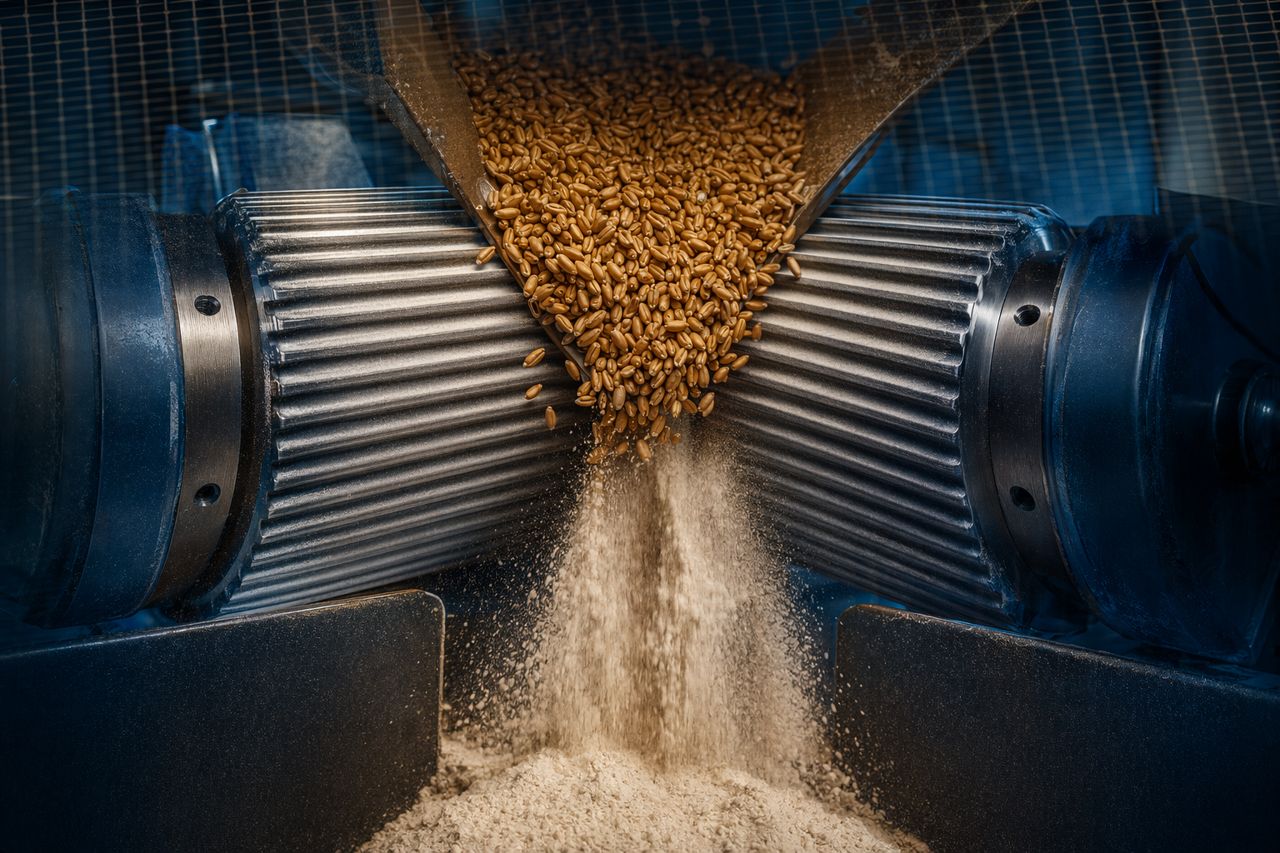
Most mills already manage variability with wheat purchasing, tempering, extraction control, blending, and finished-flour testing. Enzyme treatment adds another calibrated adjustment point when the issue is functional performance rather than basic composition.
Common triggers include:
- Seasonal or origin-related changes in wheat performance
- Protein levels that meet the number but not the dough behavior expectation
- Ash or extraction changes that influence handling, color, or customer perception
- Bakery feedback on tolerance, proof stability, loaf volume, or machinability
- Customer specs that are tighter than the incoming wheat position allows
- New blends, new crop intake, or reformulation requests
- Complaint patterns where finished flour remains analytically acceptable but behaves inconsistently
The goal is not to mask poor milling practice. The goal is to provide a controlled functional correction where enzyme treatment is the appropriate lever.
Enzyme families used in flour performance control
Aleuron Works helps mills select enzyme families according to the flour stream, application, and customer requirement. Treatment choices should be made around dough behavior and finished product response, not around generic additive language.
Amylase systems for fermentation and volume response
Amylase treatment can support fermentable sugar availability, crust color, volume response, and crumb softness depending on the flour and application. In flour mill treatment, it is often considered when customer feedback points to variable proofing behavior, slow fermentation response, or inconsistent baked volume.
The right approach depends on baseline flour condition, customer process, and the risk tolerance for stickiness or excessive softening. We help define a treatment range that is practical for plant dosing and customer validation.
Xylanase systems for dough handling and gas retention
Xylanase systems are often used to influence water distribution, dough machinability, extensibility, and gas retention. In mill settings, they can be relevant where flour performance is affected by arabinoxylan behavior, bran impact, extraction changes, or customer requirements for improved dough stability.
Aleuron Works focuses on application-fit selection: bread flour, roll flour, laminated products, steamed goods, or other customer-specific uses may need different treatment logic.
Lipase and oxidative-support systems for structure and tolerance
Certain enzyme systems can support dough strength, tolerance, and finished product uniformity by influencing lipid-related functionality and dough structure. These treatments can be helpful when customers need steadier processing performance under real plant conditions.
We evaluate these systems carefully because excessive strength or poor balance can create its own problems. The best program is the one that improves the target behavior without making the flour less versatile.
Protease systems for extensibility and reduction of excessive strength
Where flour is too tight, overly elastic, or difficult to sheet, controlled protease treatment may help improve extensibility and processing comfort. This can be relevant for crackers, biscuits, wafers, certain flatbreads, and other applications where dough relaxation matters.
For a flour mill, protease treatment requires disciplined trial boundaries and clear customer alignment. Aleuron Works helps mills evaluate the use case before recommending a route.
Treatment decisions should start with the complaint pattern
A mill enzyme program is strongest when it begins with a clearly defined performance issue. We typically help quality teams frame the decision around questions such as:
- Which customer is affected, and what product are they making?
- Is the issue new crop-related, blend-related, extraction-related, or customer-process-related?
- Are farinograph, alveograph, extensograph, falling number, ash, protein, moisture, and bake data telling the same story?
- Does the complaint occur in one flour stream, one route, one shipment window, or across multiple lots?
- What is the acceptable treatment range for the customer specification?
- Can the mill dose consistently at the intended addition point?
This diagnostic discipline matters. Enzyme treatment should be a controlled correction, not a guess added after a complaint.
Built for mill-floor dosage control
An enzyme program that works in a lab but fails in routine production is not a complete program. We design around the realities of flour mill operations: batching, micro-ingredient systems, premix handling, flour stream selection, changeover discipline, traceability, and verification.
Our support can include:
- Recommended treatment concept by application and flour type
- Practical dosage range for trial work and scale-up
- Guidance on premix compatibility and dispersion considerations
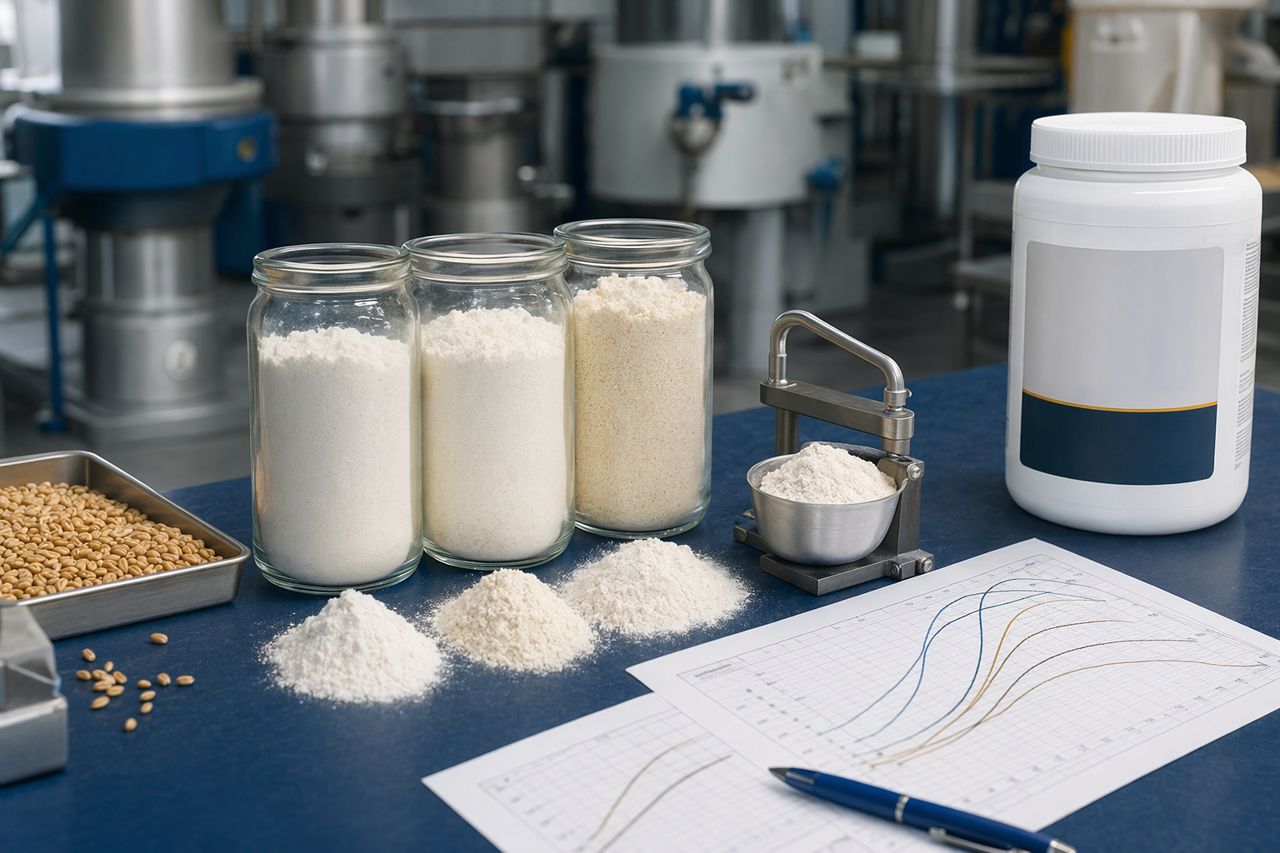
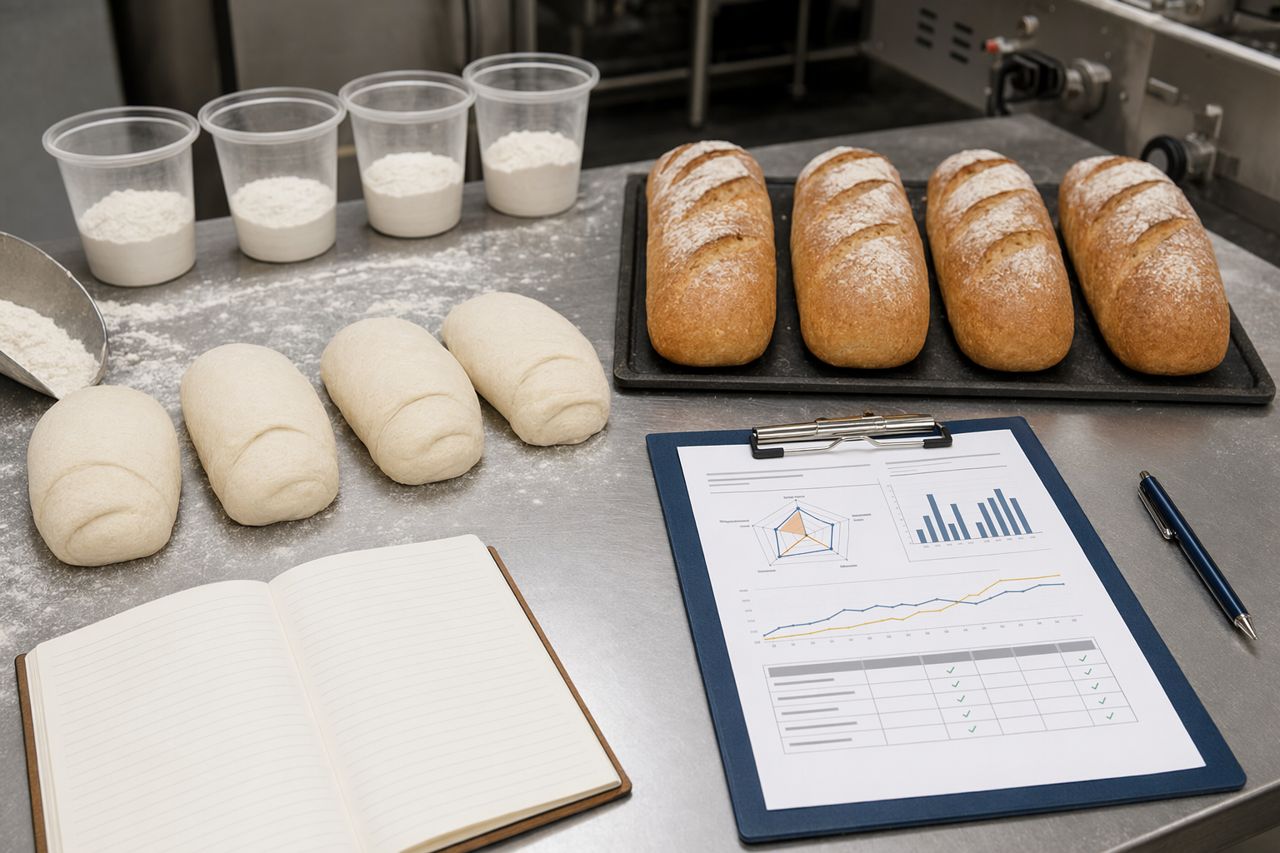
- Trial structure for untreated control, treated sample, and customer bake comparison
- Documentation language for internal approval and customer discussion
- Support for interpreting dough behavior results against target specs
We avoid overcomplicating the mill process. The objective is a repeatable treatment that quality managers can defend and operators can execute.
Trial validation before routine use
Aleuron Works encourages mills to validate enzyme treatment in stages. A typical pathway may include:
- Baseline review — evaluate flour data, crop position, complaint history, and customer process context.
- Treatment selection — choose enzyme family and treatment logic aligned to the issue.
- Bench or pilot trial — compare untreated and treated flour using the mill’s preferred dough and bake evaluations.
- Customer-use validation — confirm performance in the target production environment when required.
- Scale-up plan — define addition point, premix method, dosage control, and lot traceability.
- Routine monitoring — review flour data and complaint trends to maintain the right treatment position.
This approach keeps the program evidence-led and protects both the mill and its customers from unnecessary formulation drift.
Where Aleuron Works fits
Aleuron Works supplies enzyme treatment solutions for flour mills that need functional consistency across changing wheat realities. We are a technical B2B supplier, not a consumer ingredient brand. Our conversations are built around flour streams, specifications, process constraints, and customer acceptance criteria.
We can support mills that need:
- A new enzyme treatment program for bread, roll, biscuit, cracker, noodle, or specialty flour
- A replacement supplier with stronger technical responsiveness
- Help troubleshooting inconsistent dough behavior after wheat blend changes
- Treatment options for customer-specific flour specifications
- Support for crop transition and new-season wheat performance
- A quote for routine supply with trial quantities and scale-up planning
Request a quote
If you are reviewing an enzyme treatment program for a flour mill, tell us what flour type, customer application, and performance issue you are trying to manage. Aleuron Works will respond with a practical supply recommendation and the next step for trial validation.